
 Becoming Conscious
The Power of Perception Part 3: The Ties That Bind
We go about our lives often forgetting that our minds are not something vague and nebulous. The fact is they are things though they certainly are not things like our arms and legs. When it comes to an examination of the mind we have on the one hand psychologists who utilize a variety of perspectives, such as the biological perspective when studying how people think, feel and behave. And on the other we have neuroscientists some of whom study cognition and behaviour and how psychological functions are produced by neural circuitry. This is all fine and good; however, without examining what sort of thing the mind is they are on the outside peering in. Of course the challenge for anyone examining the mind, including myself, is that you cannot "point your finger" and say "there is the mind." This does not mean one cannot do this, it only means that proving one's perspective is problematic.
When it comes to defining the mind and it's nature the crux of the biscuit, so to speak, boils down to one question. Are we merely physical beings such that our consciousness and mind arise solely from the activities of the brain or are we beings who have consciousness and thereby mind separate from thought linked directly to our physical bodies. All of my experiences and the reading and studying I have done indicate that the latter is the case and not the former. You are, of course, free to disagree with me.

Despite the conundrum that arises when one tries to answer the question of what the mind is does it not make sense that one should first of all try to define just what sort of thing the mind is before one goes about trying to examine, dissect and subsequently come to some understanding of it? In science you start with a question, do some background work, construct a hypothesis, test it and then analyze your results and draw a conclusion. Yet when you look up the definition of mind you find that this has not been done. Yes, there are notions about the mind and what functions it performs but it is never defined with any degree of clarity by either psychologists or neuroscientists. The definition remains, as I mentioned in the first sentence, vague and nebulous hence both groups of people are studying various things in order to understand something they are unable or perhaps unwilling to define.
One can slice and dice the mind in many ways depending on their perspective, purpose for examining it or what aspect of mind is being focused on and so on. I touched on this in the previous part. The fact that perspectives may differ does not imply that one is necessarily right and others wrong in whole or in part even if one's notions about what it is are vague or nebulous. I am not reluctant to wade in on this for if we are to develop ourselves, be it for the purpose of personal or spiritual growth, we do need to have more than vague notions about it. When it comes down to the two options I come down firmly on the side of our having consciousness separate from our physicality as I stated above.
In terms of this essay series on becoming mentally conscious, going on vague and nebulous notion about what our minds are is insufficient. Also, given what I believe to be the case, whatever perspective I chose to approach the topic from had to meet two main criteria. The first one is how well it and its various aspects align with "the Truth" about what our minds are though obviously I must concede that my awareness about the truth, what it is and its nature are subjective. However, one way to determine how well a view is aligned with the underlying nature of things is by how well the ideas play out when applied in life. As they say "the proof is in the pudding". This is the same principle that science follows.
I have asked the question "What is the mind?", have a hypothesis about it and have tested it over the years. In this regard experience has shown that the approach I take works well and stands up to scrutiny. If it didn't then their would be something out of whack with my perspective and it would not work to help people though the latter can occur if I have not done a good enough job communicating it to others.
This brings us to the other criteria, namely whatever that the approach and methods I use can, if applied, help us become more mentally conscious. This particular consideration is the one most responsible for my breaking it down into the four key elements the way I have (listed below). We examined this in the previous essay (1). In summary, the intent of my approach is to be of the most help possible. To achieve this it has to have few key elements, each must be understandable to pretty much anyone and it must also be possible for anyone to apply their understanding of the elements and must also yield methods that can be applied fairly easily and directly.
The four key elements of mind:
- The thoughts in our minds: all the various thoughts we hold and their attributes or properties
- The connections between thoughts: all the various relationships between thoughts
- The processes that create and influence thoughts: the processes that affect our reaction to and integration of experiences
- Our conscious attention: what thoughts we are conscious of and why as well as the nature of our attention to them
I will also concede that what I have and will cover may not seem very simple when first read. However, I believe once we start to look at how to apply knowledge of the elements that understanding them will become fuller and deeper. Naturally, you will come to interpret what I share in your way. This is not just to be expected it is the only way it has any real value.
If I were to put one disclaimer or perhaps warning on what I am sharing it is that when we apply the ideas we change and so too does our life. I cannot say in which way or to what degree, or that the changes will necessarily be easy to adjust to. The results could be subtle though profound where the biggest changes are within us and do not impact our relationships or life situations to any significant degree. On the other hand changes within can result in dramatic changes without. This is why it is good to have a solid mental and spiritual foundation (2) when one is working on developing themselves and their awareness.
Turning our attention to the elements, if we consider them individually it is obvious how they play a significant role in how our minds function and in turn how we express ourselves in life. From them it also becomes obvious that our minds are incredibly complex due to not only to the vast number of thoughts they contain, but also because of the the connections between them. This later point is something that was been considered as far back in time as when Plato was alive. However, it wasn't looked at in any significant way until people such as Thomas Hobbes, John Locke and David Hartley began to consider or examine the mind in greater detail. It was John Locke who introduced the phrase "association of ideas". This idea influenced the thinking of the great early psychologist and philosopher William James and his ideas on how thoughts become associated (3) or connected.
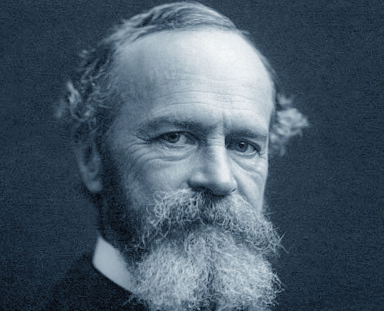
William James considered two notions on how thoughts are connected. He referred to them as connections thought-of and connections between thoughts . He viewed the former as jungle of connects that can never be formulated or where there is no hope of finding "principles" behind the ways they could become connected. As he put it...
Every conceivable connection may be thought of - of coexistence, succession, resemblance, contrast, contradiction, cause and effect, means and end, genus and species, part and whole, substance and property, early and late, large and small, landlord and tenant, master and servant, - Heaven knows what, for the list is virtually inexhaustible.
If we look at the notion that connections thought-of we can see the incalculable complexity he suggested. One might also think something he did not in that perhaps there may be a natural connectivity between thoughts that do not arise solely as a result of our paying attention to them. It is unclear from his writings as to whether he was referring to non-conscious or subconscious thoughts as well as conscious ones. In any case, it would take lifetimes to consciously or non-consciously think of every possible connection between thoughts if this was necessary for them to exist. This would rule them out as being the result of our attention to the incalculable number of possible connection between thoughts.
The fact he did not consider the possibility that thoughts can somehow become connected without attention is understandable. This is because at the time he would not have known about quantum physics and that matter can become entangled (4) nor did he consider thoughts as matter. Hence he would not be aware that thoughts can and do have natural connectivity even if we pay them no regard. We will cover how this occurs shortly.

Getting back to William James's notions, it is clear from his writing that he viewed the notion of the connections between thoughts the better explanation of how associations form as follows:
The only simplification which could possibly be aimed at would be the reduction of the relations to a smaller number of types, like those which such authors as Kant and Renouvier call the "categories" of the understanding. Accordingly as we followed one category or another we should sweep, with our thought, through the world in this way or in that. And all the categories would be logical, would be relations of reason. They would fuse the items into a continuum.
William James didn't see the mind as an aspect of self, rather he saw it as the self. It is also clear from his writings that he viewed the mind as arising from activities of the brain rather than a separate aspects or vehicles of expression. This can be seen in his writings on imagination, and other places, he stated "No mental copy, however, can arise in the mind, of any kind of sensation which has never been directly excited from without". As a result he did not account for that quality of self, our core consciousness when he examined, for example, conscious attention. Be that as it may, the work he did on his own and the ideas of others that he validated and took further examined some very important aspects of mind. Among them are notions such as conception, discrimination, comparison and attention.
All four of these concepts are processes of mind; however, at a more fundamental level they are qualities of consciousness that the mind uses or applies. Without eyes one cannot see and if we couldn't conceptualize and discriminate between things we wouldn't be capable of what we call thinking. These abilities are not skills we learn in each lifetime, they are aspects of our consciousness that have developed over time. All we do in our lifetime(s) is refine our ability to use them. These are not the only capabilities we possess; however, the others will take time to unfold. Still, as we evolve we will learn to use them as casually as we discriminate between a chair and a table now.
It has taken a very long time and almost countless experiences for our consciousness to develop the qualities I mentioned to the point where we have the capabilities we do now. Our capabilities are based on the fact that we are aware and conscious (5). Awareness being defined as the ability to react to a stimulus and consciousness being awareness plus memory. If you pause to consider the complexity of even a simple thought you can understand why it took a long time to develop sufficient memory to be able to conceptualize, discriminate, compare and pay attention to much of anything.
It might have been more appropriate to have examined conception and discrimination in the previous essay, however, I excluded it because I wanted to focus on thoughts and what they are, rather than how we come to have thoughts in the first place. As a result we will look at these two, in part at least, when we examine processes of mind. We will take a much closer look at attention when we get to the fourth key element. What is relevant to the next key element, the connection between thoughts, is comparison and as it plays a role in how thoughts become connected. We will look at this in the section below.
The Connections Between Thoughts
If all our minds consisted of were a bunch of disconnected thoughts we would not be capable of thinking very much if at all. In order for our thoughts to be of use they need to be connected to one another in various ways. Without it we would create new thoughts when we already have existing ones and our minds would fill up with redundant thoughts, ones that would often conflict with one another and we would have to search through every thought we have to get at our memories. Further reasoning would be very difficult and we would be hard pressed to know that something is part of or related to something else. If you look at the relationship between thoughts and the connections between them you could say that thoughts are like threads that connections turn into various cloths.
We often compare the computer to our minds in that they both store and process information. We liken the brain to a computer where the thoughts we have are like bits of information on a drive (hard drive, external drive or somewhere out in the internet) and both conscious and non-conscious mental processes as the programs the computer runs or uses to access them. It can be convenient to do use an analogy, I have done so myself at times; however our minds do not operate like the computers we use. Nowhere is this more apparent than when we look at how our thoughts become connected.
Essentially, computers use complex indexes, lists and "trees" of various kinds to determine where and what things are and so on. . The computer software assigns address to all files so it can find them regardless of whether it is a program or the files they use. It also keeps a list of file name extensions so it knows what to do with a file when it finds it. For those who are not aware of how this occurs, when we create a document on the computer using software, such as Microsoft Word, and name it "MyFile", the software will save it under the full name of "MyFile.docx". The "MyFfile" part is the file name and the "docx" part is the file name extension.
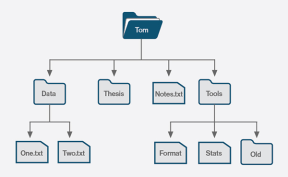
In the example I have given the extension ".docx" is associated with Microsoft Word. When we double click on a file the computers operating system looks up the extension in the list and then loads and runs the associated software. If you rename the file and remove the ".docx" part the computer will ask you what program you want to run to open the file. The computer also passes the file address to the program, which uses it to locate and load the file. However, our minds do not use any of these types of things to function. If it did it would be far slower and would get slower over time and eventually grind to a halt as we acquire more information. This is often what is going on when a computer slows down so much that it virtually grinds to a halt. The above begs the question - "If a mind does not keep lists of thoughts like a computer does how does it find thoughts?" This is, in part, where connections come into play.
In order to examine and understand how thoughts become connected we first needed to consider what thoughts are, which we covered in the previous essay. With this knowledge can then consider how this occurs. As we saw in the previous essay in this series thoughts are vibrations "encapsulated" in energy of a particular form, in this case matter of the mental sub-plane. Now the question becomes "How do these packets of energy become connected?" Fortunately the list is quite short.
Thoughts are either intrinsically connected, a natural phenomenon, or the connection is created by an act of mind. We will look at both methods though the second method is one we should all be familiar with, at least in part, as we do this is whenever we label an object. When we label something we create an association or connection between the label for the object, which is a thought but not the word for it, and our perception of objects we perceive. The word we use when thinking about something is the result of the mind-brain interface. The thought comes first and only then does the brain assign a label to it, that is if we do so consciously. Do note that a thought is also a thing, if they were not we would not be able to have thoughts about thoughts.
The mind has the ability to discriminate, which I mentioned earlier. This is what enables us to distinguish "this from that" and the aspects of each. As mentioned, do not confuse the thought of something with the word used to represent it. Language is created by the brain, there are no words in the energy that thoughts are made of, just as there are no images.
Now, thoughts are composed of many aspects, this is why I refer to them as composite thoughts. I will refer to aspects of a thought as their attributes or aspects. These aspects are essentially other thoughts. To grasp what I mean take a few moments to consider any thought and you will see that they require other thoughts. For example the thought "car" really has no meaning without its attributes. By attributes I mean details about a "car" that allow us to distinguish it from a "lamp" such as having a body, engine, seats, steering mechanism of some kind and so on.
Thoughts and their aspects or attributes are created during the process of discrimination. By this I mean that we distinguish between a person and their surroundings and also do so with their features such as having eyes, nose, arms and legs. Also be aware that not everyone discriminates to the same degree. Some gloss over features of things and don't even notice them while others notice minute details. We will cover this more later. There is a natural connection between thoughts that have common aspects. For example a pen and a pencil are both writing implements. This begs the question "Why is there a natural connection and what is it?"
To simplify how natural connections form we start by recognizing that thoughts as well as their attributes, which are other thoughts, are energy of a particular form and each has their own specific vibration. In the previous essay I used the analogy of a thought being like a chord made up of various sounds where each attribute is a sound or more accurately a chord within the chord. Now image that each sound or chord is like a tuning fork. A thought then becomes a bundle of tuning forks. So when one or more tuning forks resonate any thought that has that same tuning fork, or attribute, whether in whole or part will resonate along with it. This occurs whether the thought is in our mind or outside of it. We tend to not notice thoughts outside of our own for a number of reasons including the fact they do not resonate as much as those within it.
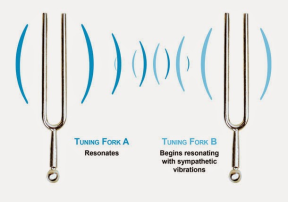
To complete the picture image each tuning fork has an energy field rather than being a static "solid thing". This is different from a tuning fork, which needs to be struck to create a sound. As a result where there is a likeness between one or more energy fields of various attributes or thoughts there is a resonance between them. This resonance is what I refer to as an intrinsic connection. Remember, I am speaking figuratively here and an energy field, at least as most imagine it, is in 3-dimensions. This is not the case when entanglement occurs. Observed occurrences of quantum entanglement show that entangled particles react instantaneously to each other, the mechanism that enables this is not based on known laws of space and time.
This entanglement occurs whether the connection is intrinsic, similar to what William James referred to as connections though-of or the result of a forced or empowered connection as occurs with what he referred to as connections between thoughts. The latter form of connection is created as a result of our minds attention. We do use both types of connections to locate thoughts in our minds. We do not look them up in a list like a computer does, we locate them by simply thinking a thought as this results in other thoughts or attributes that are alike resonating with it. When they do resonate we can become conscious of them. Going back to the sound analogy, when we think a thought we strum a chord and thoughts that have likeness or similarity with it in our minds will resonate and stand out. Most people are not aware of how they are connected and need not be to use them. It happens naturally; however, awareness of this is a very powerful tool as we will see in due course.
So, we see that our minds can and do use the aforementioned property of matter to find the thoughts we are searching for. Bear in mind that intrinsic connections are weaker so they are "harder to find" than those that are connections between thoughts. As a result the clearer one's mind is and the better one is able to focus their attention (5) the more likely they are to notice more subtle and/or intrinsic connections . Note that the connections we create between thoughts are thoughts themselves, unlike intrinsic connections and are stronger. They are stronger because, like all thoughts, they are the result of an act of consciousness. We will now look at the two forms of connection in a little more detail.
The first method William James mentioned was connections though-of. An intrinsic connection is not a thought, it is simply an natural entanglement or connection between vibrations. As mentioned, he considered it to be unlikely the mind connects thoughts this way, due to there being a virtually inexhaustible ways thoughts can be related. He was right about the idea that the mind does not consider every single intrinsic connection, it doesn't have to, the connection already exists even though the connection has no actual substance to it as it is not a thought. However, the mind can notice the connection for various reasons. If it does so it then makes a connection between the thoughts and in the process creates a thought based in part on the nature of observed connection.
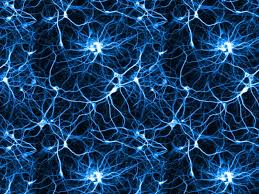
The second connection method he wrote about is termed as a connection between thoughts. This type of connection occurs when we actually put our attention to something, and it happens whether we are thinking it consciously or not. I say it occurs even when we are not conscious of it because our minds do a great deal of processing of our perceptions behind the scenes at the non-conscious level. This is what occurs when it integrates our experiences.
Putting our attention to something empowers or adds energy to the thought if it existed already or creates a thought if there wasn't one already. Typically, as mentioned, this would utilize an existing intrinsic entanglement or connection. However, as we shall see the mind can create new thoughts or connections, which are essentially a relationships between thought, without an intrinsic connection. We do this when we label things or draw connections between things that are dissimilar.
Let us look at an example. Say we think of something being hot. The result of our thinking it is that all thoughts that share the attribute(s) we associate with the label "hot" are activated to varying degrees. I say to varying degrees because their vibrancy varies, or perhaps a better word would be presence varies, which affects whether we are conscious of them. This includes thoughts that only have an intrinsic connection. Those that stand out can be noticed more easily by either our conscious or non-conscious mind.
Another example would be when we think of something such as a car in that thoughts related to cars will be activated. They could be thoughts about types of cars, the aspects of cars, a particular car or aspects of a them or even what we do with or in them. Again, what thoughts become activated depends on the person and the associations their minds have created and empowered. There are also other factors involved such as such as how many related thoughts there are for the mind to sift through, how closely they compare and whether we have programmed our minds to block us from being consciously aware of them.
So far we have seen how thoughts become connected or entangled through natural intrinsic connections and by acts of attention. However, this is not the full picture of the immense number of connection between the thoughts in our minds. The other part is the substance of the connection rather than the nature or mechanics of it. It is through these additional connections that the complexity of our minds begins to become clearer.
As we have already discussed a connection can occur automatically and as a result of associations we create when put our attention to things, something that also occurs at the non-conscious level. There is no way to prevent entanglement from occurring, nor would we want to do so even though it also leads to many of our mental challenges. This is because without it the power of our minds would be, to say the least, greatly diminished. What is important is that we know, accept and utilize this knowledge.
It is one thing to create simple connections such as between the thought of what "a car is", the label "car" and an actual car. I am sure that we can all recognize that were our minds not able to recognize, label and connect thoughts we would struggle. However, we would also struggle if we could not further categorize or qualify various associations between things. I am referring to conceptual thoughts about things.
Take the notion of "container", for example, and that we are looking for one to put something objects into. We do not have to think about every object individually and determine if it is a suitable container or not. Our minds automatically skip over objects that do not match the definition of container and which cannot be used for such a purpose. Further, it likely skip over objects that may be containers but they are not suitable for the object(s) at hand.
How well our mind does such things depends on what mental processes we have established in our own minds as well as the clarity of our thought and so on. If we think container in general the mind will consider all things that can act as a container, but we can narrow down the field by qualifying it such as thinking "containers that can hold water". The ability to compare things is a quality of our consciousness, one that has evolved over time and which our minds can use. However, our minds must be trained to take full advantage of this capability.
So far we have looked at how basic connections between thoughts are based on likeness or similarities whether they be intrinsic or created by our thinking about them. We rarely create connections between thoughts when there is nothing that connects them unless we have delusions. For instance, a city dweller would not typically connect the thought 'phone" with "shark", certainly not directly. Someone else might because at some point they may have had a phone conversation with someone about sharks.
Thoughts almost invariably become connected based on shared attributes. From this it is obvious that the degree of connectivity that results from this alone is based on the number of shared attributes, which is akin to things being similar in some way, and how empowered the attribute are. An example of this might be the thoughts "wood" and "car" would likely be at weakly connected because most cars are not made of wood. However, there would likely be a strong connection between the thoughts of "fire" and "wood". Again our attention could make the connection between "wood" and "car" stronger due to our attention to it.
William James was correct in that there are virtually innumerable ways for thoughts to link, especially if you include intrinsic connections or those thought-of. The only limit is based on our experiences and imagination. I mentioned above that our mind also creates thoughts not based on things but also on properties of things. It creates classes of objects that share attributes and/or members. It also applies labels to them though they are not about particular things. Such thoughts are conceptual. Examples would be car, container, numbers and even the number "1", unless I am referring to a representation of it, for example the number "1" printed on a piece of paper. These thoughts are more aptly referred to as classes of objects. Words like car, table, chair or plane refer to classes of things as opposed to "my car" or "my table" or "that plane", which refer to specific instances of objects within a class.
When the mind does this there is a connection between the class of objects called "cars" and "my car" as my car has to have the attributes that I attribute to a car. I stated attributes "that I attribute to a car" because each of us can have different definitions of what a car is. For instance some people refer to hatchbacks as cars whereas others may not.
Whether we are referring to a particular car or the class of objects we are using a label. Both of these thoughts have attributes and we know what we are referring to when we used them based on the language we use. We say "there are a bunch of cars" and know we are not referring to a particular car. I realize that my explaining this may seem to be of little value, but as we shall see later understanding this is of great value to us in our quest to become mentally conscious.
Above I mentioned conceptual thoughts. There are a number of definitions for this term and one can choose to use any one of them. However, I use the term to refer to thoughts that are about things but not about a particular thing. The thought "car" is a conceptual one while the the thought about "that car" are not. Conceptual thoughts are complex by nature just as thoughts about things are in that they also have attributes. To me the difference is one of scope. When a label refers to something that can be uniquely identified it is a complex but non-conceptual thought. One can get into a long winded discussion about whether all thoughts are, by nature conceptual, since they are mental representations of something and not the thing they are representing. While this can be an interesting discussion and is worth noting it is not of much value in terms of how our minds work or for one trying to become mentally conscious.
As mentioned our minds categorize thoughts. Its ability to conceptualize, a form of abstract thinking, is one of the qualities our consciousness possesses and which are minds are able to use. When we conceptualize we are creating thoughts that relate to other thoughts and connect thoughts in new ways. The thought "car" connects all cars together. Being able to create and use conceptual thoughts also simplifies things for our minds. It allows us to think of things in groups or classes. Try to imagine that you cannot group things such as cars and always have to consider every car individually.
A "grouping of things" is referred to as a "class of things". This is the basis of set theory in mathematics and allows us to work with the classes rather than having to consider each element of the class individually. Elements or things within a class share a set of common attributes as I touched on above. The properties or attributes that define "a car" are shared by all things that are cars, just as cars have the properties we associate with things we call vehicles. The class of things we call vehicles has members such as boats, jets, helicopters, bicycle, skateboard, pontoon planes and cars. All of these inherit the attributes or aspects of the class of things called "vehicles" or they wouldn't be vehicles. Some things also share attributes that are not part of the class definition such as seats, engines, wings, wheels and so on. Completely separate classes can also share attributes and members. Some vehicles have seats and most have engines but we find seats in restaurants and schools and engines in lawn trimmers and generators none of which are vehicles.
When we consider classes and subclasses of things we find that with every level we go up the number of attributes grows smaller. The thought vehicle has fewer attributes than the thought car, which in turn has fewer attributes than the thought of "that car". This nestling of classes within classes creates hierarchies of thoughts. The higher up the tree you go the fewer attributes the thoughts have and consequently it applies to more things, that is to say the larger the number of things there are within the class or set. As you go up the tree the thoughts become more abstract. This same principle applies to attributes that are shared by different things. For instance many things are made of metal or wood or have legs or are round. The ability to do this is essential and is another reason why our minds are so flexible.
While we create a large number of thoughts consciously our minds create far more that we are not aware of, many of which we never become consciously aware of. We see this in children whose minds create all manner of thoughts related to objects and movement before they have developed the language to be consciously aware of them. During this time we develop the foundation thoughts of our mental house at the non-conscious level related to our physicality and the world around us. This is one of the reasons we do not remember much from the first few years of our childhood.
The first years of childhood truly are the formative ones for our minds. We learn about objects and their shapes, textures and colours, about sounds and relationships between objects. We learn about distance and further develop our cognitive skills as well as our ability to differentiate or discriminate between things. We do react and respond to our surroundings though we are not really conscious aware of these thoughts and what they mean. We learn to crawl and move around before we are aware of what we are doing. This is because we have not applied labels to them yet. We can do this because our consciousness has evolved to the level where the ability to do so is inherent in our minds. Also, we do not actually need formal language to grasp and make sense of things though over time we become almost completely dependent on it.
Our minds process or integrate experiences at the non-conscious level. This is something that it does continually throughout our lives. They create thoughts related to all manner of things and we are not at all aware of their doing it. For instance, the mind can create a class of objects that are "Things I can repose on" (things that I can rest or lie upon). This set could include just about anything that can hold my weight, a table, a chair, couch, bed, counter top, the ground or a crook in a tree and so on. I may never consciously consider a chair as being part of this class, or even consciously considered the notion of "repose" but if I need to repose I will find a place that satisfies this requirement. We just think "I want to sit" and we find something that we can sit on. So, our minds continually create thoughts, which in turn it's creates commonalities where none existed due to natural entanglement or are very weak. They do so less and less as we get older but this is more due to our getting into mental ruts than any loss of the ability to do so.
Another example of the kinds of thoughts our minds create behind the scenes may help clarify what it does without our knowing. Say we had a couple bad experience at a public park when we were very young, had another similar experience when we were a little older and then another one in our late teens. We may not consciously associate the experiences with parks but our mind remembers. Such associations arise when our minds integrate experiences whether we are conscious of it or not. The significance of the connection depends on existing thoughts, their various connections and the energy of the connections and so.
All of these factors are based on the thoughts we already hold, thoughts based on the past. The result of this connection is that at a later time we feel uncomfortable when at a park, perhaps we barely look at them, we may ignore them or even avoid them altogether. When asked to go to a park with friends we may say no because the idea doesn't appeal to us. We may never even think about the notion that we don't like parks and if we do we are likely to be unaware of why.
Such automatic and also non-conscious associations are the source of a significant amount of the programming in our minds. We can all relate to having thoughts or feelings arise without knowing where they come from. We may feel uneasy or uncomfortable in certain situations but are not able to attribute a reason to it though we may try. It is not uncommon for people to think that it is some form of intuition but that is rarely the case.
The ways thoughts can become connected or linked are uncountable. We are influenced by them even though we are not even aware they are there. We like this or that but rarely can remember why, we choose to do certain things, pay attention to particular things completely oblivious to the underlying processes of mind that lead to them. These are all signs of not being mentally conscious and it will not change until we put in the effort to notice them by paying more attention to our reactions to experiences. This is why it is important and of great value to pay attention to what we are thinking and feeling moment by moment and take the time to pause and consider why.
It is also important to note that thoughts can become connected even where there are not exact matches between attributes. Similarities alone can be enough to lead to an intrinsic connection. It also occurs where thoughts or their attributes are similar. How much variance is allowed depends on the person because we apply our own tolerance to things. For example, the more rigid and less flexible the mind is the smaller the variance allowed. This is why ones imagination, the ability to be creative and curiosity also diminish as the mind becomes more rigid.
Another element of commonalities is how empowered they are, which affects whether we notice them or not be it consciously or otherwise. One way this happens is due to the significance of the thought or attribute. By this I mean that if we take two thoughts that have few attributes and one of the attributes are common between them then the relative strength of the commonality would be far higher than if the two complex thoughts share only one or a couple attributes. For example, a car has many attributes or aspects, and only a few are likely to come to mind when we think of a car. We probably wouldn't notice or consider a commonality between a car and the rubber on the bottom of our shoe just because the car has rubber tires or floor mats.

There are other ways commonalities are empowered, which results in their taking on greater significance. One is dependent on the strength of the emotions that arose from the reaction that created the thought. Another is the strength of the commonality is proportional to the number of thoughts that are connected by it. Yet another way is how we react to or think about the thought. By this I mean if we make it significant for whatever reason the connection or commonality will have more power. For instance, if people's physical appearance matters more to us than how they act and treat us then this is what we will notice about others. They could be the nicest people in the world but if their appearance is one we don't like then we will have a harder time seeing their "niceness".
I could go on at length about commonalities; however, what I have covered will be sufficient to explore the affect they have on our mind and the degree to which we are conscious on the mental level. Some key points to remember about connections or commonalities between thoughts are:
- Thoughts are comprised of energy, have attributes and have "fields" (similar to an electromagnetic field)
- Thoughts are connected via entanglement
- Thoughts become entangled naturally or by acts of attention (conscious or otherwise)
- Entanglement occurs naturally and cannot be prevented
- Thoughts become entangled based on commonalities between them and/or their attributes
- The power of the connections between thoughts depends on their significance (how empowered they are) and how many thoughts are connected
Becoming mentally conscious is a very broad topic and so I am breaking it down into several essays. Due to the length of the essays each will be presented as a series of which this one, the Power of Perception, is the first and this particular article is the third part. I fully realize that what I have written so far is fairly complicated; however, "there is a method to my madness".
What I have found, over the decades that I have been studying and exploring awareness and consciousness, and working with people to develop theirs is that most struggle in developing their "spiritual aspects". This is not the result of a lack of wanting to, it has far more to do with our life lessons, the challenges and distractions presented to us because of the nature of our physical existence and the mental and emotional baggage we take on (5).
What commonly happens is that we try different things or different perspectives to awaken our inner awareness and natural gifts. The problems with this is that while they may share similar elements when we lack a full understanding of the differences we take on conflicting notions that add more barriers than existed before. At times we make some progress and take this as confirmation that we are on the right path, but we are stuck in a labyrinth.
It is not that we cannot find the answers that we seek it is that we seeking the wrong answers. Those who seek tend to hunger for release from the burdens, the pains and the longing. The degree to which people hunger and the ways they go about relieving it vary, but so long as we are using our unbalanced minds to try to find the answers our challenges remain. My belief is that what we need to find is faith. When I state faith I am referring to faith in general, which is a trust or confidence in what we believe about the nature of things rather than a strong belief in God or doctrine based on spiritual apprehension. If we truly believe we are more than we appear to be, that there is something within us that is divine or immortal or transcends the physical reality we find ourselves in then we need to trust that faith.
We all know we mostly live through our thoughts and the emotions they manifest and that our whole existence tends to be based on them. We think from the moment we get up until we fall asleep. Many cannot even get a good night sleep because of the domination of their minds. We are always doing this or that, planning to do something or remembering things we have done before. We react to what we think and experience, which inevitably leads us back to more thinking. This is what obscures our inner light so the answers we seek can only be found by looking within, by clearing the debris and clutter within our minds. This is what we I believe we need to dedicate ourselves to and the method we go about doing so will only help us if they help us to achieve this.
Too many clamour for their moment in the sun forgetting that the sun is there - within. It as if the pale distractions without can give some form of solace from the hole or emptiness we feel inside. But there is no hole, no emptiness. It is only the fear of the ego, a fear that can never be quenched from without though it tries with endless diversions. It is a self fulfilling prophecy trapped within an endless loop for it knows it is "no thing" without what is within. And, as it mutters to itself and dances before the mirror it created we are dragged along with it. Even though we are enraptured by the dream it is but a dream for we are not the dream or the mirror or the dancer. The charade will only cease to be when we remember and accept that we are the sun - then both we and our ego will be at peace...
Up to this point in the Power of Perception essay (which is part of the Becoming Conscious series) we have looked at the mind and its key elements. We have also examined the first two elements, thoughts and the connections between thoughts, in a fair amount of detail. This has been necessary to lay a foundations that will enable us to explore the processes of mind and then the attention of both the conscious and non-conscious or subconscious aspects of it.
We benefit from understanding all four key elements of mind for a a number of reasons. One of the main benefits is developing an more accurate awareness of how our minds work. This helps dispels the vague and inaccurate notions we have about them, ones that make becoming mentally conscious more challenging. The other is that it helps us to train our minds by using methods based on how our minds work. If what we do is not based on how our minds work they will be less effective and could even make matters worse.
The one thing we should not do is delude ourselves into thinking there are any quick fixes. There are none. Becoming more aware emotionally, mentally and at the causal level are the work of lifetimes. This is why it is important to develop a solid foundation so we do not get ahead of ourselves. With a firm foundation to stand on we can reach higher and further.
It is my hope that you realize that it is not a race will become more mindful and patient with yourself. When you look at yourself try to be honest and evaluative rather than open minded, negative and critical. For it is my firm belief that if we remain patient and mindful we add less baggage to our minds and begin to peel away the layers we have added over the years. There is a bright light within each of us and when we start to clean the windows we have begin to realize we are that light and it will shine more brightly!
End of Part 3
==> Return to Part 2: Alcatraz
© 2015 Allan Beveridge
Last updated March 12, 2018
References (*- denotes essays only available to site members):
- *Becoming Conscious: The Power of Perception Part 2: Alcatraz
- Developing Our Spiritual Foundation
- William James (1952 version); The Principles of Psychology, Chapter XIV Association, Encyclopaedia Britannica, Inc., Chicago, London, Toronto, Geneva
- Quantum Entanglement: http://en.wikipedia.org/wiki/Quantum_entanglement
- Time to Weigh Anchor