
 Who Pulled the Plug?
Part 2
We all struggle with the kinds of things I have been referring to, from time to time, for a number of reasons. A common one is that we our becoming very comfortable with our jailer, our minds. For many of us it is the only "I" we know. This is why we do not realize we have been incarcerated by them nor how and why (1). If the majority of our actions arise from acts of mind and it is well constructed it will serve us, if not we will serve it. Which one is true for us really all comes down to a choice: try to lift the veil or stay lost in the shadows of ego and mind frittering away power.
It is our mind that creates our illusion of reality, within it lies the illusion of separateness. It is our minds that give rise to the our personalities, something we become overly attached to. We see the "I" our minds create as the real or true "us" rather than an aspect of "us", one empowered or enlivened by our actual "true self". We also tend to see our personality, and hence our mind, as fairly rigid even though experiences show us they are not. You could say that escaping the minds shadows is the Holy Grail.

I do not want to give you the impression that our minds are the enemy. They are not. The fact is we need them, we cannot function here without them. However, we need them properly trained. As long as they are not we remain captive to their constructs, many of which we are not aware of. Doing this means clearing debris from our them. This way we are loosening the knots and plugging the leaks. We do this by training our minds, being more consciously attentive and through acts of will. In the process reclaim power.
Regardless of the approach one takes it will involve working on our minds for every thought we have can influence and even change others. I am referring to working on our reasoning skills, being more objective, less superficial in observing and so. Presuming one has the requisite intent and desire (2) the next key element is working on our ability to focus our attention. While most realize the benefits of focused attention, and can focus it at times, few realize the full impact a lack of consistent mental focus has on us and our lives. When our minds are not well trained we end up juggling a number of unresolved things on a consistent basis and pay attention to a whole range of things that are irrelevant or beyond our control.
In a very real way, and hopefully you will excuse the expression, the mind spends much of its time "playing with itself". The more it does this the more power we surrender. This is why paying more attention is important, in addition, our attention is critical because we cannot plug the leaks we cannot see. Time to turn the lights on. Yes, it takes time but few tasks worth doing are easy. So we should go easy on ourselves, not in a slack way, rather we shouldn't be overly critical of our pace. The task at hand is not unlike trying gradually turning a large ocean liner.
So, we know that any path to reducing how we disperse our power lead through our minds. We also know that changing it is easier said than done. It is almost like trying to work on the engine of the car as you drive down the road. Further, what we do will affect our personalities and this can be a challenge because we become fairly attached to them. To work on them often means not only working on aspects of our personalities we may not want to part with but also against our own histories.
Our history is massive collection of highly connected thought streams that make up a body of our mind. This should not be hard to accept when you consider that all our thoughts have arisen out of our reactions to experiences, and our experiences are our history. Nothing we think or believe can be separated from our history. It is this interconnectedness and the dependencies that arise that leads to our minds resisting change. It is not our minds that resist, though it can appear this way, it is only following its programming. This resistance grows as thought patterns are reinforced over the years.
Any approach we take must respect this fact that it is a challenge to look into the minds inner doings and it is a tangled web we have woven. With every passing year our mind junk accumulates becoming like a huge knotted ball of knotted balls of string. You cannot force such a knot apart, doing so makes it tighter. This can lead our becoming discouraged, complacent, impatient or even angry and bitter. To loosen a knot you gradually tease it apart, something that requires a measure of patience. Psychologists use what is commonly known as "talk therapy" to try to probe and tease such knots.
When you try to unravel a knotted ball of string you start with the strands on the outside and pull on them lightly. This way you can see deeper into the knot and how the various strands are connected. If we are persistent and patient we can gradually unravel it. Yes, the mind has a far higher degree of complexity and interconnectivity than any knot; however, the process is the same. Do not let the enormous complexity of the mind concern you. This is because many of our challenges are related to a small set of influential core thoughts or beliefs.
Changing these sends ripples through the mind affecting every thought and thought stream they are connected to. In relation to the matter at hand, the loose strands are what we can observe in ourselves here and now. We notice them by paying attention to what we are thinking and doing (3). The hardest part about doing this is in carrying through with it consistently due to all the distractions in life and the goings on of our minds.
Our ability to access more of our personal power is directly related to how clear and well balanced our minds are. The principles are same the regardless of whether we want to be more successful in business, happier in our personal lives or are on a spiritual path. We all find it hard to work on our minds. It is a struggle to focus on conserving power and directing our attention though not because we do not want to.
It is a struggle mostly because there can be many nameless and faceless aspects of our minds operating at the non-conscious level draining away the power we need to work on dealing with them. They are always there drawing us in and will virtually run our lives from the shadows if we let them. All of these things are the doings of those pesky mental programs we have created, doings that for the most part are unbeknownst to us. Yes, it can be hard to change what you cannot see, however it certainly is possible if we are paying attention. Doing so is part of any approach one takes to reclaiming their power.
____________________________________
These threads or thought streams I referred to earlier wind their way through our minds. They are activated and enlivened or empowered by our attention to them. This attention that does not have to be of the conscious variety and most occurs in the background. They are "spawned" by our conscious attention to various thoughts. We do not know about these threads. By this I mean we do not know what thoughts are active, their purpose, how they interact and affect other thoughts, their relative strengths and influence and so on. They form complex structures and we can only work on them by becoming aware of them. We change them by putting conscious attention on them. We do this because our power primarily flows through our conscious attention. If this were not the case we would never be able to override our non-conscious impulses nor be able to actually change them.
These streams of thoughts form knots many of which are dispersing our power. Regaining our power means finding, unravelling and releasing them. When it comes to our minds - nothing is simple or even as it seems. Our mental knots are complex weaves of thought streams that have to be teased apart. This is where paying attention to our thoughts comes in. We want to notice what we think, what we pay attention to and do not, and how we react to our experiences. What we are looking for are patterns to what we notice and think, how we react and the outcomes. We want to react to what we are perceiving as little as possible. This can be a challenge as we are quick to react and also tend to notice and do the same things we always have. Stepping outside of and escaping our routines and patterns of discernment is a challenge. This is in part why we can struggle with object analysis of ourselves.

All thought streams served a purpose at some point, at least from our minds perspective, even if that purpose was neither beneficial or useful. They can remain steadily active for years, even a lifetime, others fade away. It all depends on the person, their experiences and the thoughts they come to have. What we do not realize is a large number of our thoughts are nothing more than noise, clutter or mental junk. In order to conserve our power we have to clear our minds of them. Some can be cleared fairly easily while other will be harder for the reasons we have touched on but also because some of our junk becomes very near and dear to us. Some will also be highly connected.
The implication of the above is that when we change one thought or thought stream it is hard to say what else might be affected and how. What can do what seems a fairly simple change and find that can affect other things we never expected it to and not necessarily in a beneficial manner. This is an example of the "Law of Unintended Consequences" and one of the dangers of neuro linguistic programming. This is why I mentioned that we first should looking for patterns and get to know our knot better before rushing headlong into or proceeding willy nilly in making changes we think help us. We make no changes until we Know.
In order to do what I have been talking about it is essential that we develop good observation skills. This means, as mentioned, paying more attention and observing objectively. Being objective means not allowing our wants, needs and beliefs and so on to dominate how we react to and hence our perception of our experiences. When we do this we should be making mental notes, at the least, regarding the situation and our reactions and so on.
We also need to to work on not observing in a superficial manner. I touched on this earlier when I mentioned it is hard to start consciously noticing things we have programmed our minds not to. Being mindful and focusing on noticing as much about what is going on, rather than reacting to it, helps us bypass subjectivity. It does the same thing in helping us see more of what is going on. If we still struggle with paying more attention or being less subjective and superficial in our observations we may need to consider asking ourselves "Why?"
By doing these things we see more clearly and reduce the tendency to overlook aspects of our experiences and reactions (both thoughts and feelings). While a significant level of objectivity is required the more we focus on paying attention objectively the more we are "telling" our minds that doing so is important. This reinforces the notion with our non-conscious mind making its thought stream more powerful. This, in turn, leads to change at the non-conscious level. We must be both persistent and insistent in this as it takes time to create a new way of thinking and being. It is amazing how much we can learn about ourselves by doing this. for there are benefits to spending more time looking within us and less without...
By paying more attention we begin to notice things about ourselves including the loose superfluous and irrelevant noise (junk) and aspects of our mental knots. The knots they form in our minds are elusive in the glare of everyday living. Mindfulness and meditation, and other such practices, reduce the glare and are excellent for helping us see them. They all waste of our power and do not help or serve us. We need to let them go. For example, from time to time pretty much all of us have thought about what we believe others are thinking about us. S
ome spend an inordinate amount of time doing this and we do it with more than just people. As we have already see, doing this involves evaluating all kinds of different possibilities and the "What-if" scenarios. We know that such mental activities do nothing but dispel our power and waste our time. Our progress is limited when we have not developing our ability to be attentive. The fact is we cannot work on what we do not see and recognize as not serving us.
Our best guide to what we should be doing is found in our own lives. They lie waiting to be found, like hidden gems in a pile of rocks and we can find them by observing ourselves and our lives right here and right now. When we do this we want to try to notice what our assumptions are because we need to make sure they are actually valid. You might be surprised to learn just how many unsubstantiated, erroneous and false notions we hold. When being attentive we also want to observe rather than react to our thoughts and emotions. The goal is to be a neutral 3rd party observer of ourselves. This way we do not read to much into or let our minds be focused on our reactions in a significant way. An example might help...
Say I notice that I struggle with "A" (substitute any challenge you'd like for the "A"). I start my work on it by simply being aware of and accept it. What I do not want to do is rush to assumptions about why I struggle with "A". My mind will likely conjure up its own notions about why, but it is part of the problem so I do not accept these notions. I want to know WHY I struggle with "A". The reason I struggle with "A" is because of the thoughts in my mind, thoughts created from my reactions to experiences. We do what we do for a reason, by this I mean in our minds are thoughts that guide our choices. Our mind makes choices based on its reasoning and its beliefs about the way things are for us.
In the essay Is That Right? (4) I spoke about how our minds come to hold laws. These laws lead to rules that we apply in particular circumstances through individual rulings. I also spoke about how we can have multiple rules that apply in a given situation that can conflict or be erroneous (due to errors in reasoning). It is not different with our issues. My issue "A" could be the result of a number of conflicting rules I hold. I need to get at and know which ones they are because I struggle with "A" for a reason.
I struggle with "A" because of thoughts I hold be they beliefs or laws and rules and so on. I may even have added on conditions on whether rules apply, such as ""A" is permissible if and only if..." or ""A" is permissible when..." and so on. Our minds applies its rules and so on in a given situation. It can get pretty jumbled in a hurry. We typically use our laws, rules and such conditions as justifications for our actions. To sort the tangle we need to see what it going on from different angles.
So, recognizing that there is likely no one single reason I struggle with "A" I will try to remain in observer mode. This does not mean I can ignore the consequences should I continue to struggle with "A". I may very well have to do something to mitigate them until I can resolve the underlying issue. It only means that I do not rush to try to make all kinds of assumptions about the underlying problem, and try to work on them or what I believe to be the root causes without knowing more. I do this even if the reasons may appear to be obvious.
For better or worse our issues aren't going anywhere. If they are issues of importance to my growth "here and now" they will resurface. If I am attentive and remain open to learning about myself I can see and come to know them. This way I do not make my knots any tighter. My challenge "A" is like a loose thread or perhaps a few loose ones on the outside of my knots. The reasons or reasons for a particular knot could be near the surface or buried deeper in the knot among a whole group of thought streams not visible at the moment. I will not know this unless I am observant.
The bottom line is that if I presume to know why I struggle with "A" and start to react without knowledge I can make things worse. I could be fighting the wrong fire or little fires connected to a core issue(s) and not realize it. In the later case, the fires will continue to spring up until I resolve the core issue(s). I can save myself a considerable amount of time and effort by finding and by working directly on the core challenges. Remember, thought streams that are activate will activate those "related" to them. I will try to be careful and attentive so I can to learn more about and understand the connected thoughts and their relationship with and influence on "A".
For example, if I found myself getting frustrated in a certain situation I wouldn't assume it was solely due to the situation. I would try to recognize that the situation exposed an issue within me leading to my frustration. I would remember the feeling of frustration and look for aspects of the situation that triggered whatever rule or rules my mind applied. What I want to find out is "Why am I frustrated?". Fortunately all of our issues have a common source, that being our mind. We know where they are and can set about hunting them down.
Taking on our own minds can be intimidating, though it need not be. In and of themselves they have no power over us, we only think they do. Our programming is merely thoughts that together act and react based on their nature. We believe things and hold personal truths some of which are elevated to laws about the "way it is". These leads to sets of rules, which our minds apply in various situations. So, if I am getting frustrated it is most likely due to a law or rule I have set up such as one of the form "If this and that and ... occur I am frustrated" (of course this is an simplification). The patterns we notice can be based on many factors, some very obscure, such as the physical setting, who is present, what I am wearing, what I experienced, think and feel just prior, the time of day, whether I ate, how I feel about myself and so on.
What we tend to experience are the result of rulings. Figuratively, the rules hide behind them. For example, in a particular situation I may not know what we want, but I know that I am not getting it. The result is the ruling, the "if I don't get X then I will feel this way" or "If I do X then Y will happen." By observing our rulings we can get the rules they are based on. By continuing along this path we can get at the laws the rules are based on. Sure, they can and often will be buried quite deep and finding them can be like trying to catch the wind. However, our minds are powerful and we did create them in the first place. They will respond to our intent and will do a lot of the heavy lifting for us. We need our will and focus to direct their activities.
Again, remember that we do not want to push too hard for the answers to our questions. For one thing, we may not be asking the right questions and for another the less we try to force the answers the better. For example, I am pretty sure we all have found ourselves trying to remember something and it keeps evading you no matter how you try. Further, the harder we try to force our memory the more elusive it becomes. I am also fairly certain that you have all found that the memory comes to mind later "out of the blue". This happens because we have let go of the need for the answer and our pre-conceptions about what it is. This allows our mind to "do its thing" and it will present it to us. It is no different in learning to listen to our "inner voice".
Our fears of what what we will find (5) make us hesitant to look deeper. This is a challenge we will not surmount until we have had enough of the discomfort it brings or we want something more than the power of our minds resistance to it. Even our resistance is a big power leak because we make think we are ignoring it our minds do not. They spend an inordinate amount of time essentially scheming to keep us from doing anything and distracting us. Still, we can start to work on it even if our comfort level with self exploration is low.
We do not need to become totally objective, this is so difficult to attain. However, the more we do what we have looked at in this essay the more objective we become. In the essay One Thought (6) I looked at one way of helping this process along. Essentially, the method is to try to focus our intent on paying more attention and being more objective a little more each day. This builds up our strength and confidence. By continuing to do this we will start to notice what we need to work on. Further, being more objective has the effect of rendering our minds less resistant to change, a double bonus!
We all know some of the ways we waste our power though perhaps not down to the level where we know the exact reason(s) why. As we have looked at the process of dealing with and plugging our energy leaks by paying attention in observation and not analysis mode and certainly not problem solving mode. Doing this makes it more likely our junk will be revealed to us and that we will notice it when it does. The difference is critical. It is not dissimilar from how one would go about gaining someone's trust. The best way to develop trust is to be honest, open and sincere.
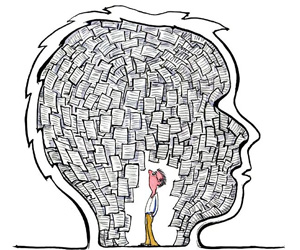
In a very real way, if we want to grow, we need to develop a trusting and loving relationship with ourselves. The more conditional we are the greater the resistance. When we accept that we have challenges, everyone does, and forgive ourselves for not knowing better at the time it gets far easier. The benefits of being willing to look into the dark places within us cannot be understated. It helps to reduce our minds fears about facing and examining what lies within. It doesn't fear growing, its fears are based on what we programmed into it. We have been afraid to and it is just following orders. You may not think that developing such a relationship with ourselves is not important or even silly and unlikely to make much of a difference ... but it does. Doing this is an act of will, one that changes the programming of our non-conscious mind.
Paying attention can be harder than we think. We are used to living in the stream of thoughts we call the "I" rather than observing them. At first we may not notice much that we were not already aware of, but with persistence will see more. We begin to notice things we were not paying conscious attention to before at all. For example, we tend to be quick to judge and react to things, including people. We see someone and almost immediately have formed an opinion of them based on our first impressions or judgments of them.
Many rely on their first impressions; however, contrary to popular beliefs, they are not generally based on "true intuitions". They are based on mental programming that is often faulty. When we are paying more attention to our thoughts we notice that we are doing this and can intervene rather than automatically accepting our judgments. Once we start to notice what we pay attention to and what we are actually doing a very interesting and wonderful thing happens. We actually begin to see and experience the world more as it actually is rather than how we have imagined it to be.
When I was growing up many viewed long hair in a very negative light. People would stereotype those with long hair people based on notions they allowed themselves to believe were true. Some saw them as dirty, not too bright, untrustworthy, drug users, lazy or trouble makers and so on. When they saw long haired people these thoughts came to the fore not because they were true. They may have been told it by someone and accepted it or met people who had long hair and showed some of these traits and erroneously applied them to ALL people with long hair. They were not seeing people as they were, they were seeing them as they believed them to be.
We often take on our beliefs based on faulty reasoning, such as "Every long haired person I've met was stoned." and as a result come to think that this applies to all people with long hair. Doing such things no only results in a skewed and false view of reality, it is a huge waste of power. As alluded to already, our minds pay particular attention to things we have made important and some things it ignores completely. This affects all that we perceive. We do not realize it because nearly all of our judgments occur at the non-conscious level beyond our prying eyes and attention.
Our minds makes its determinations based on past experiences and on beliefs, laws or rules that may not even valid. All we know is we see something we do not like and go with our "feelings" about whatever we perceive or is going on.
Also in the list near the top of the essay are the expectations for the projected future and are were two points. I am referring to clinging to the past and the projected future. It should be obvious how clinging to the past wastes power. Consider how regret, shame, hurts, guilts and blames and so on all get woven together and that each thought stream and the emotions they activate take power. The past is gone, we cannot change it. While pining over what our minds thing might have, could have or should have been can have a numbing effect on our conscience it only hampers us. I believe in actions and consequences or choices and their consequence. The only question is have we learned or not?
The other area to be mindful of is our expectations for the future. Consider our future expectations are based on our momentum, in this case the momentum of our thoughts and emotions. The mind calculates or derives these imagined futures based on on our conscious and non-conscious thoughts. The more we look to the future the more powerful our imaginings and projections about it are. Our minds will, if that's how we trained them, continually monitor all the factors related to our projected future. The further reality deviates from its expectations for the future, as the mind sees it, the more anxious it becomes. It is no unlike stretching of an elastic band. If you have every felt uneasy, anxious or unsafe or scared, but couldn't attribute a "cause" to it, this could be the reason. In this case we do not just disperse power by by activating the thought streams, we also do it as it takes power when "the band is stretched."
Of course there are benefits to having our non-conscious mind doing things in the background for us, such as providing warnings. However, these are only of value when they are NOT based on poor reasoning or false notions and so on. This is the source of our irrational fears. It would not be a huge waste of power if we did this on occasion, but we do not. We do this fairly frequently. How much we fall into this trap with any particular thing depends on the breadth and depth of our past thoughts about and our emotional reactions to them.
I cannot understate the benefits of good reasoning skills. They help in assessing situations, factors, risks, potential consequences, and making clear decisions. These skills also help one to accept fewer opinions and gossip as fact, hold fewer stereotypes based on anecdotal evidence or other preconceptions and so on. It helps us to examine our beliefs (7) to see if they "hold water". We also become less gullible and more self reliant. All of these things help us conserve power.
It is easy to see how the mind gets busy doing all kinds of things that dispel our power. We make lots of different things important. We make some things so important, including what should be trivial matters, that our minds come to feel they are almost a matter of life and death and will defend them even to our detriment. As I mentioned, we should remember to ask ourselves questions. A good one remember is ... "if I knew I was going to die in the next few days would this matter to me?" Life is too precious to waste on matters that are of little or no consequence.
The more we pay attention and are conscious of and act in the moment the fewer loose threads we leave lying around. This means making conscious decisions and closing out trains of thought. If we do not do this our minds will continue to concern themselves with them. This way we are not wasting our time on things that are of no benefit to us. This is something we can do when matters are within our control is one thing, doing so when matters are beyond our control is quite another.
When something is beyond our control we should consciously work through the decision tree by looking at the possibilities and deciding how we will proceed in all of them. We can get hung up concerning ourselves about not knowing what we will do in various scenarios or think there are "nameless" and potentially dangerous options. To deal with this we have to accept that we cannot know everything, consciously consider them and accept that all we can do is deal with them if and when they happen. Further, we must be firm in our acceptance of our decisions and not be casual about them. Note that I am not saying one has to "get all serious about it", rather one is is merely firm and direct with their thoughts.
We leave fewer loose threads and active thought processes when we are not concerning ourselves with things that we should have resolved already or that are of no consequence or irrelevant. Being concerned abut how others view us is a good example. How others view us should not matter at all, though many make this important. Why? If we like who we are then why would another persons view matter? Are we going to even think about changing ourselves for them, let alone do it, when we already like who we are? I doubt it.
It is only when we do not think well or like certain aspects of ourselves that what others think about us matters to us. When this happens we find ourselves thinking about what traits we possess that might make them think poorly of us or we try to figure out what we can do to make that happen and so on. We think about such things and then carry on to other things thinking that is the end of it, but it usually is not. We forget that our thoughts and emotional reactions don't just vanish, they remain active for as long as we feed them our energy.
When one works on what I have mentioned they almost automatically begin asking more subtle questions of themselves and listen for the answers. Questions such as "Do I really need this?", "Why does this matter to me?", "Why do I care what they think of me?", "Do I pay enough attention to others?" or "What purpose does this serve?" come to mind (not that everything has to have a purpose). It's simple math, the less time and energy we spend on things that don't matter the more we have to direct at what does.
All the points I have made in this essay have analogies with the functioning of a computer. For example, if you keep opening up new programs and do not close any your computer will grind to a halt regardless of how fast it is. Another example would be if you loaded a bad program on your computer it can cause all kinds of problems including making it crash. This would be analogous to taking on erroneous beliefs that conflict with not just beliefs we already have, they may also conflict with reality.
Also, computers require maintenance as anyone who has owned one knows. You need to run programs that defragment the disk, clean junk files and links and so on that build up in your computer or it will slow down and could even crash. You can avoid doing these things if you continually upgrade to a faster computer but will eventually run into the same problem with it and have to buy yet another one. Well, we cannot upgrade our minds in the same sense, they are what they are. What we can do is upgrade their software, which is our thoughts, by developing the skills I mentioned. Further, we can do regular maintenance to keep our minds functioning well through mindfulness and paying attention to our reactions to experiences.
Part of the junk in our minds is the tangled web of laws, rules and conditions we create. What we typically need is to hold fewer of them and try to make sure those we do hold are clear, concise, non-conflicting and unambiguous. When we first start to clear up our minds we find it requires a significant amount of attention and effort to deal with because we tend to ignore our minds. We go about our business unmindful of all that is going on within them. If our mind was a huge library, every thought a book and all the people moving around were the thought streams what holds our conscious attention would be the equivalent of us sitting in a chair in a busy library with a few books thinking we had the library to ourselves. However, if we continue to do this it gets easier.
Finding our issues and solutions to them in the vast library of thoughts that is our mind is not as difficult as it sounds. Our lives reflect what we think and hence the imbalances are a reflection of these thoughts. If we pay attention to our lives, willing and able to accept responsibility rather than blame outside forces for our challenges and observe our reflection we can get at the roots thoughts. We can resolve most of our issues by finding and modifying the thoughts and even thinking processes that give rise to them. This is the main purpose of the essay; however, we can use exactly the same method to notice and reinforce our skills, positive attributes and beneficial qualities.
I often use computer analogies to make points about our minds as they have a lot in common. One area where the mind and computers differ significantly is our minds defend themselves. To get what I mean imagine you are trying to add new or update software on your computer or some other device and the device refused to do it. Anything we do that persists for long enough, including how we think, becomes ingrained in our personality. Our minds become attached to their version of who we are, to our personality. They can be very reluctant to let it go of beliefs and thoughts even if they are holding us back. We can change these though how much depends on our will and focus.

I fully realize that for some what we have covered can be intimidating. Before you get out the popcorn, close the curtains, put on your favourite movie and curl up on the couch do not let it intimidate you. Consider that if the mind can do what it does without our conscious attention and direction and then what it can do with it even a portion of our full attention. Further, once we get going and are committed there is a "snowball effect". Once you start to work on one thing on a regular basis it soon becomes part you and grows stronger. The skills I have referred to are core skills, ones our minds use continually. Developing them helps us in every way.
This essay was by no means meant to be definitive on the topic of power. My intent has been to bring a greater awareness of power, explore some of the "ways and why's" of how we waste or disperse it and provide some ideas on dealing with the leaks. However, I would be remiss if I did not mention that the focus has been on reducing the power we waste. Do not turn your efforts to reduce how you waste power into a quest for power itself. I cannot state this any better than it was in the below passage from The Cosmic Doctrine by Dion Fortune.
“To exemplify - the man who desired power would obtain vanity. To obtain power he would have to desire that qualities which confer power – strength, foresight and wisdom. The man who desires power builds for himself the consciousness of the vain egotist. The man who desires strength, foresight and wisdom, builds for himself the consciousness of power.” ~ The Cosmic Doctrine by Dion Fortune (8)
By doing the kinds of things I have mentioned in this essay we are not seeking power, we are working on getting to know ourselves. This is key. In the process of getting to know ourselves better we see and deal with the ways we waste and dispersing our power. It is the path of growth all of us have to travel regardless of the way we choose to go about it. If we make this part of what we do on our journey through life we will develop the qualities of strength, wisdom and foresight. Developing these attributes confers power upon us. When one can do this ... all the lights come on!
==> Return to Who Pulled The Plug? Part 1
© 2016 Allan Beveridge
Note: - "*" denotes essays only available to site members of The Twin Powers; visit the Becoming A Member page to learn more about being a member and how to become one.
- Becoming Conscious Part 1: he Menagerie Part1
- Intent and Desire
- Paying Attention to Our Attention
- Is That Right?
- Under the Covers
- One Thought
- Ex. 1: What Do I Believe?
- Dion Fortune, The Cosmic Doctrine, Boston, MA, Red Wheel/Weiser-LLC (Chapter 27, pg 164)